Grizzly Bear
This big bear only thrives in areas that aren’t disturbed by people. Yet, the biggest threat facing Grizzlies today are their interactions with humans. Save endangered species today by joining one of our campaigns!
Help End the ExtinctionVital Signs
- Common name: Grizzly Bear
- Latin name: Urus Arctos
- Conservation Status: Special Concern
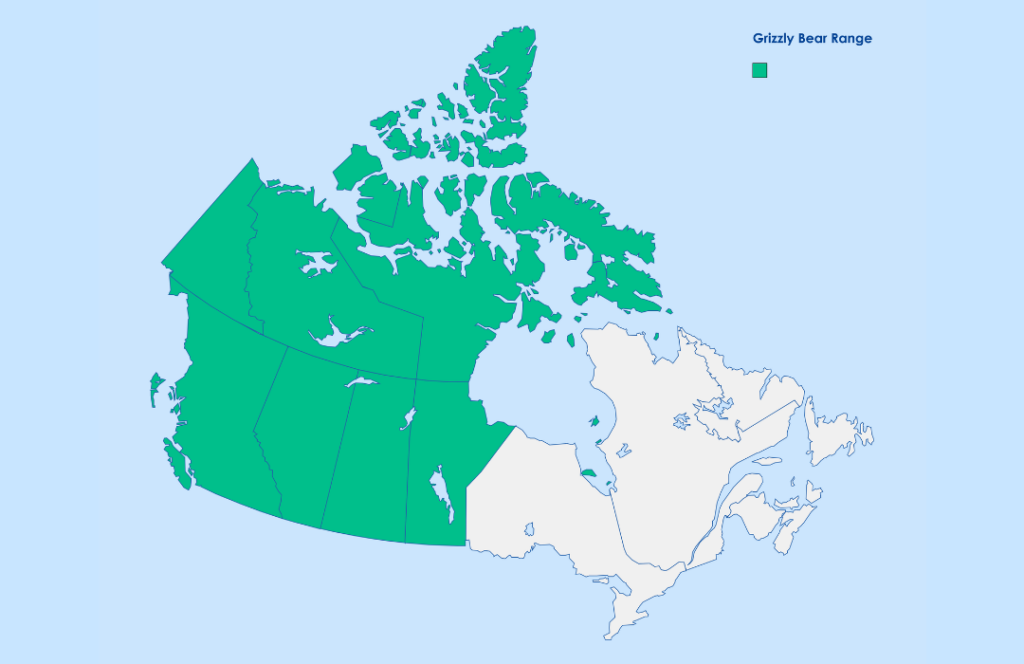
- Range: Northwest territories, Nunavut, Yukon, British Columbia, Manitoba, Alberta, Saskatchewan
- Lifespan: 20-30 years
- Size: females are 100-150 kg in weight, males are 180-350 kg
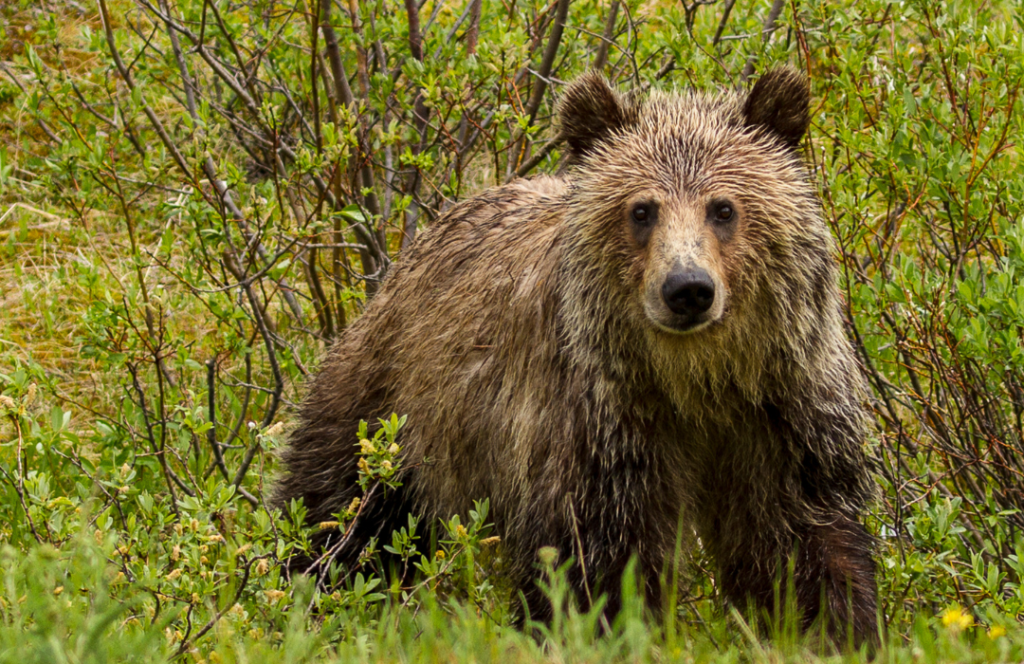
Grizzly Bears come in a variety of colours. They can be brown, white, yellow-white, or even black! They have a hump over their shoulders, which is caused by the large muscles in the bear’s front legs. These bears often look like they weigh more than they do because of their body shape and long fur coat.
Grizzly Bear Facts
- Babies are very small, weighing only 4 kg when born
- Though it’s considered the second largest land carnivore in North America, plants make up the majority of its diet
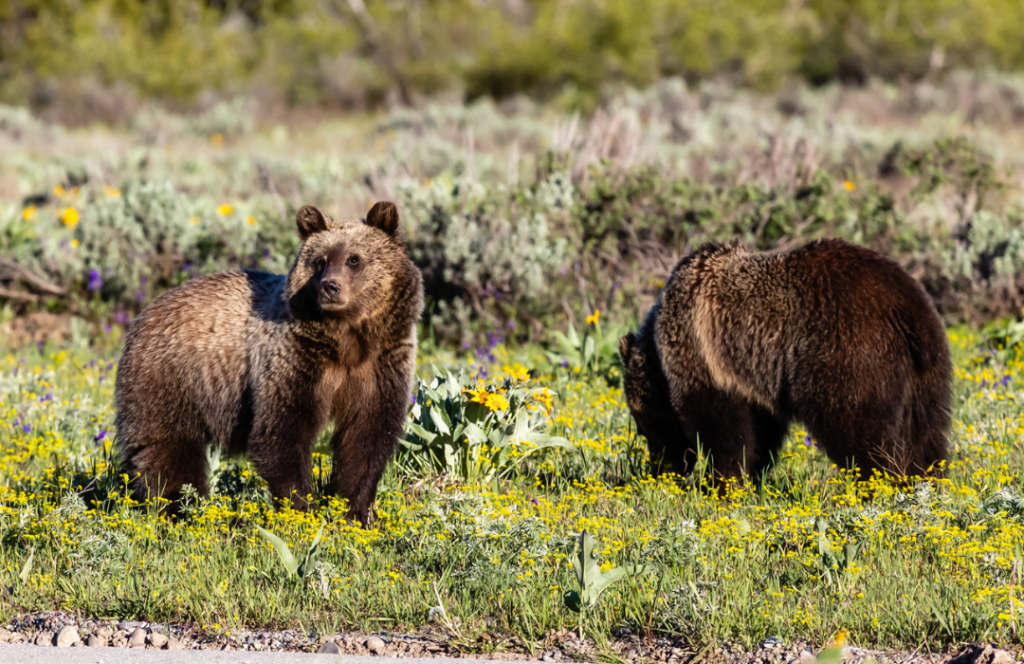
- In the spring, they spend a lot of time in meadows or near avalanche slides to eat the freshly grown plants
- They aren’t true hibernators. In fact, they can be active (if lethargic) for the whole winter.
- Grizzly Bears are extremely strong and have good endurance; they can kill a cow with one blow, outrun a horse, outswim an Olympian and drag a dead elk uphill.
- They are solitary creatures but will warily tolerate other bears at concentrated food sources like a coastal salmon stream or a large patch of berries. During these times, they’ll use their posture, facial expression, sound, and smell (ex. droppings, urine, tree rubs) to communicate and relay information to each other, like their social status.
Avoiding Grizzly Bears
-
Make noise. Clap, sing or talk loudly—bear bells are not enough. Let bears know you are there, they would rather avoid you, too!
-
Keep campsites free of attractants.
-
Stick to official trails.
-
Watch for bear signs—tracks, droppings, torn-up logs or disturbed rocks—and leave the area if fresh signs are found.
-
Travel in large groups.
-
Keep dogs on a leash—or at home.
-
Leave any area in which you find a large dead animal—and alert the site staff.
And check out Parks Canada’s guide to safe travel in bear country.
Threats
One of the biggest threats to the Grizzly Bear is people. The bears are often killed by people who are defending themselves or their property, by collisions with vehicles, by those who mistake them for legal game during a hunt, and by those hunting illegally.
Another threat is loss and changes to habitat. For Grizzly Bears, this is caused by the extraction of natural resources like oil, gas, coal, diamonds, and wood. Agricultural development has limited the bear’s habitat, too.
What’s Being Done
There are many protected areas that overlap with the natural range of Grizzly Bears in Canada. This includes 15 national parks.
The Grizzly Bear is also protected by hunting regulations in British Columbia and the Yukon. In Alberta, Grizzly Bear hunting is now illegal with the exception of Indigenous subsistence hunting.
Canada has committed to the goal of protecting 30% of lands, ocean, and freshwater in Canada by 2030. This goal will help protect ecosystems, restore habitats, and fight climate change. All these things are a step in protecting Canada’s at-risk animals—so let’s hold the federal government to their promise.
How to Help
- Help Out: Ask your local provincial or territorial MP to support stiff Grizzly Bear hunting restrictions in your area.
- Learn: Stay informed about endangered species by signing up for Nature Canada’s monthly e-newsletter.
- Take Precautions: Purchase bear-resistant trash cans and electric fences if you live near or in rural areas. You can also educate yourself on bear safety and what to do if you encounter a bear in the wild.
- Find out more: Help us end the extinction by taking action for nature today—visit conservation websites like Nature Canada or join one of our campaigns!
Resources
- COSEWIC – Assessment and Report
- Hinterland – Who’s Who: Grizzly Bear
- Parks Canada – Bears in the Mountain Parks – Grizzly Bears
Originally drafted by volunteer Claire Smith. Updated in July 2022 by Simona Casale and in September 2026 by Jamieson Findlay.