The insects we are terrified of are running the planet
I remember the first time I went camping for three weeks as part of a volunteer programme.
I was sixteen, and I had borrowed my dad’s tent, which happened to be purple, coincidentally my favourite colour, making the whole experience feel considerably more exciting than it perhaps deserved to.
The first night, however, was a disaster.
I had always considered myself a nature lover, but loving nature from the relative comfort of a city is rather different from sleeping alone in it.
There were no social media notifications, no familiar hum of traffic, and no reliable phone signal to retreat into; instead, crickets, rustling leaves, and the tiny, almost imperceptible movements of creatures going about their lives in the darkness.
For perhaps the first time, I was forced to listen to a world that normally disappears beneath the noise of modern life. I did not sleep particularly well.
Looking back, I think what unsettled me was not necessarily nature itself, but my unfamiliarity with it.
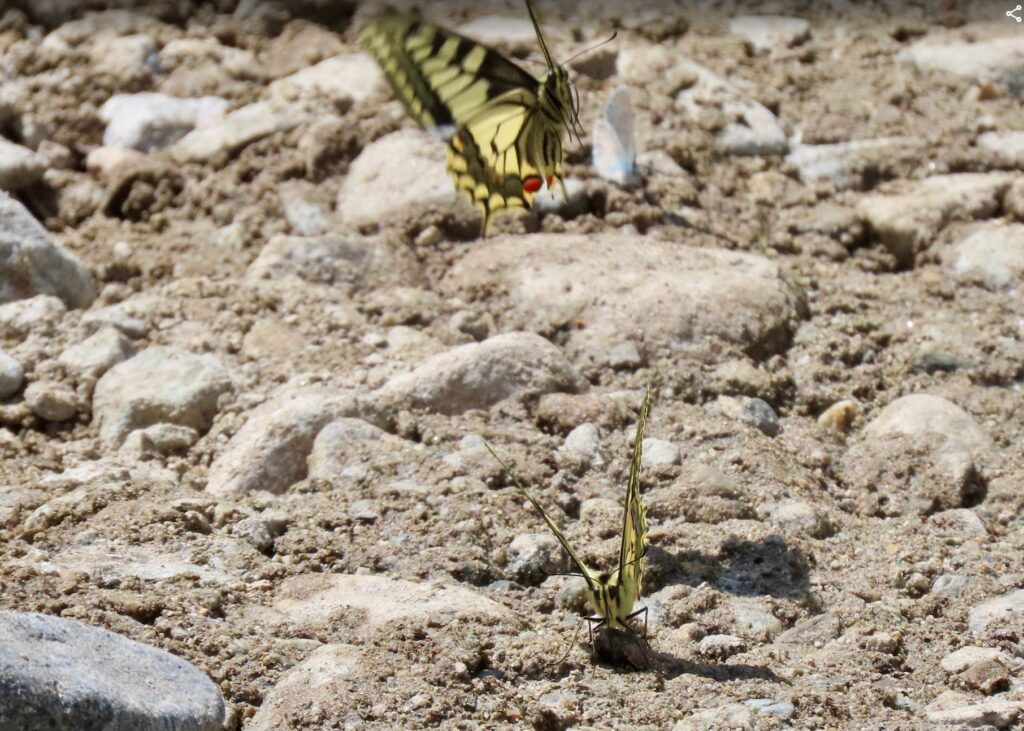
The twenty-first century has given us an extraordinary ability to insulate ourselves from the more-than-human world, allowing us to live surrounded by concrete, glass, screens, and artificial light while rarely noticing the small lives moving beneath our feet.
Perhaps unsurprisingly, I had always been the strange child trying to save ants.
I remember some children treating it almost like a game, seeing how many ants they could step on, while I found it deeply cruel, whether intentional or accidental.
I would sometimes pick up ants or tiny, harmless-looking insects, place them on a leaf and move them somewhere higher, away from the path of children’s shoes.
That does not mean I was fearless.
I was still frightened of spiders, still wary of bees, and still capable of experiencing that instinctive recoil that seems almost culturally programmed into us when a many-legged creature appears unexpectedly.
Respect for another living being does not automatically dissolve fear of it, and I think that distinction matters, because our responsibility towards other species should not depend upon finding them beautiful, familiar or emotionally appealing.
What, then, is so important about the creatures we instinctively want to swat, spray or run away from?
Quite a lot, as it turns out.
Insects make up about 75–80 per cent of known animal species, with current estimates suggesting around 5.5 million insect species worldwide, although a substantial majority remain undescribed.
Their ecological importance is even more extraordinary than their diversity.
Approximately 87.5 per cent of flowering plant species are estimated to be pollinated by animals, with insects accounting for the vast majority of these interactions.
Insects also decompose organic matter, recycle nutrients, aerate soils, regulate populations of other organisms and provide food for countless birds, amphibians, reptiles, fish and mammals.
In other words, the creatures we so often regard as peripheral to the world around us are deeply embedded within the systems that make that world function and flourish.
Interestingly, we have become particularly good at defending insects by translating their importance into economic language.
One widely cited study estimated that insect pollination contributed approximately €153 billion to global food production in 2005, equivalent to around 9.5 per cent of the value of the agricultural production examined.
These figures are useful because they make ecological relationships legible within an economic system that tends to value what can be quantified.
Still, they also reveal something rather uncomfortable about the way we justify the existence of other species: we seem to find it easier to appreciate an insect once we can demonstrate what it is worth to us.
A bee becomes easier to protect when we understand its contribution to food security; a pollinator becomes agricultural infrastructure; an ecosystem service becomes an economic asset.
Yet perhaps the more fundamental question is what happens when we stop asking what an insect is worth to humans and begin asking whether its right to exist should depend upon its usefulness to us at all.
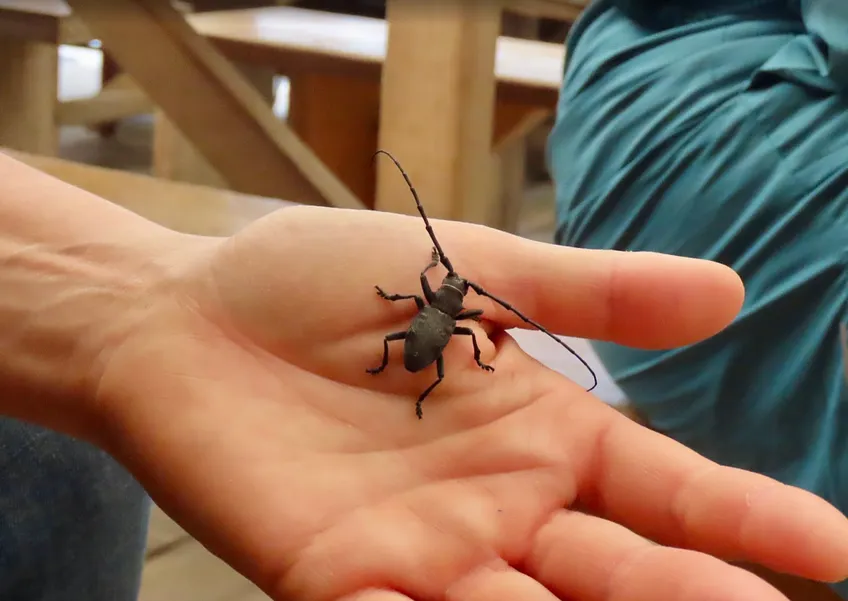
The urgency of that question becomes clearer when we consider what is happening to insect populations.
Substantial evidence now shows insect declines in many parts of the world.
Habitat destruction, agricultural intensification, pesticide use, pollution, climate change and invasive species are among the pressures repeatedly associated with insect decline.
As insects occupy so many different positions within ecological networks, their decline can have consequences that extend far beyond the individual species themselves.
I think back to that camping trip whenever I read about these declines, because the experience that began with my discomfort gradually became something much more intimate.
After the first few days, I got accustomed to the strange sounds at night.
What initially felt foreign slowly became familiar, and I grew comfortable with the little creatures that occasionally found their way into my tent.
I was adjusting, in a very literal sense, from a cosmopolitan city to what was, perhaps, a much older understanding of home. Then I saw the spider.
It was huge, black and, to my sixteen-year-old self, absolutely terrifying.
I’ll admit my first reaction was to freak out, but after the initial fear subsided, I remember looking at it and thinking it was probably far more frightened of me than I was of it.
I began to wonder whether it was hungry or thirsty, so I sprayed a little water and watched it respond (and it turned out it was thirsty!).
Over the following days, something shifted almost imperceptibly: the spider became familiar.
Beetles appeared, ants wandered in, and other insects occasionally crossed the boundaries of my temporary home, but the spider gradually acquired a particular place in my attention, and, unexpectedly, in my affection.
By the end of those three weeks, it no longer felt like an inconvenience in my tent, but another inhabitant of the small ecosystem we happened to be sharing, a roommate! (If anyone should be the intruder, definitely would be me, given that it was his home first!)
There is something rather beautiful about that memory because nothing about the spider itself had changed.
It hadn’t become smaller, prettier, or objectively less frightening, nor had it suddenly acquired any characteristic that made it easier for me to categorise as “conventionally” cute.
What changed was my perception
I had spent enough time observing another living being to stop seeing it exclusively through the category of threat.
When I eventually packed up my tent, I remember making sure to let the spider back into the forest rather than leaving it behind, and although I never learned what species it was, I still think about that peculiar little friendship.
What I mean when I say that the insects we are terrified of are running the planet is not that insects control the Earth, but that ecosystems depend upon countless relationships that humans rarely notice.
An insect pollinates a flower, a flower produces a fruit, a plant feeds another organism, an insect becomes food for a bird, organic matter is broken down, nutrients return to the soil, another plant grows, and another insect arrives.
The planet does not function through isolated heroes; it functions through relationships, and I found myself defenceless before an intrinsic, organic form of love when I connected with this spider.
That is why the decline of insects should concern us even beyond the question of whether our crops will continue to be pollinated.
When we remove pollinators, decomposers, predators and prey from ecological networks, we are not simply losing individual species; we are weakening relationships between species, and the consequences can move through an ecosystem in ways that are difficult to predict.
The insect world existed long before our cities, economies and supply chains, and insects have evolved extraordinary relationships with plants, soil, fungi, predators and one another over timescales that make the history of human civilisation look remarkably brief.
Yet we have become very good at treating their presence as an inconvenience, clearing the plants they depend upon, spraying the organisms we perceive as pests and transforming habitats into spaces that are aesthetically pleasing to us while becoming increasingly inhospitable to other forms of life.
Perhaps the first step is simply to see them differently. To understand that what looks disorderly to us may be habitat to something else.
I still remember the sweet spider from that purple tent, and that was key to my understanding: to try my best in each situation not to let fear dictate my future choices and to allow love and compassion to choose for me.
Want to help Canadian species and spaces? Stay tuned with the latest in Canadian nature by subscribing for email updates. You’ll receive regular updates about what we’re doing to protect Canadian nature and how you can help.