A Disarming, Charming Bird: An Artist’s Reflection on the American Goldfinch
Very few birders rush for their binoculars when an American Goldfinch flits into view. They’re common, familiar, almost background characters in the daily theatre of our backyards. But I’d like us to pause with them and consider that this “novice birder’s bird” leads a life of social complexity, metamorphosis, and often self-proclaimed resilience.
In 2023, I set out to draw every bird species recorded in Waterloo Region. It was a way to reconnect with my art and my sense of attention – a year‑long practice of looking closely at a favourite subject. The American Goldfinch was the first bird I drew. My January 1st goldfinch was worried, stiff and lacked the confidence of the bird itself, but I shared it anyway. Instead of hiding from my shortcomings, I returned to the goldfinch again and again – thirteen times, in fact. I wanted to get it right. More truthfully, I wanted people to see goldfinches the way I see them.
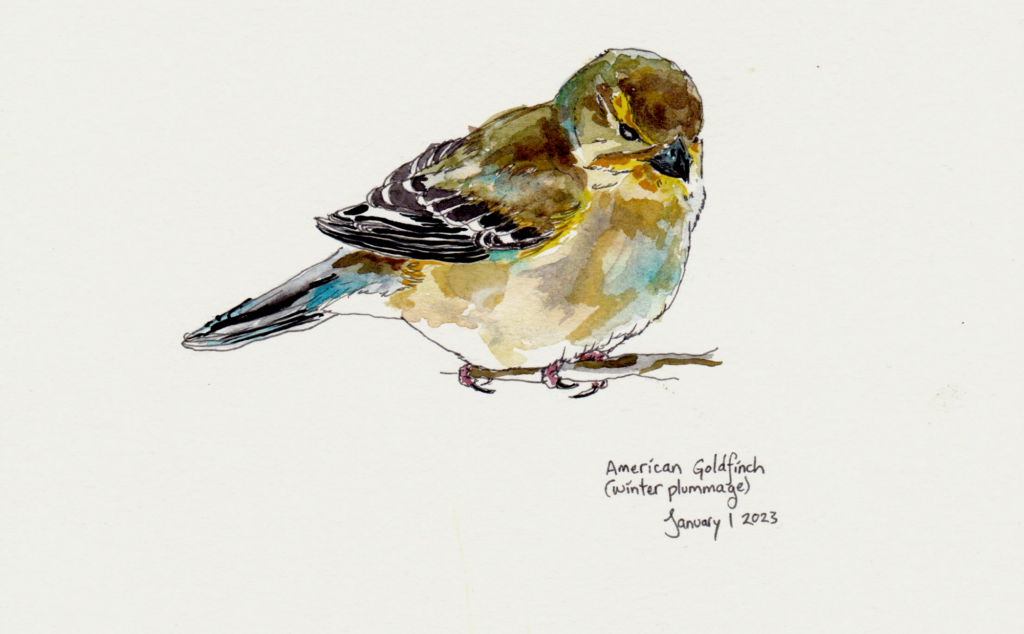
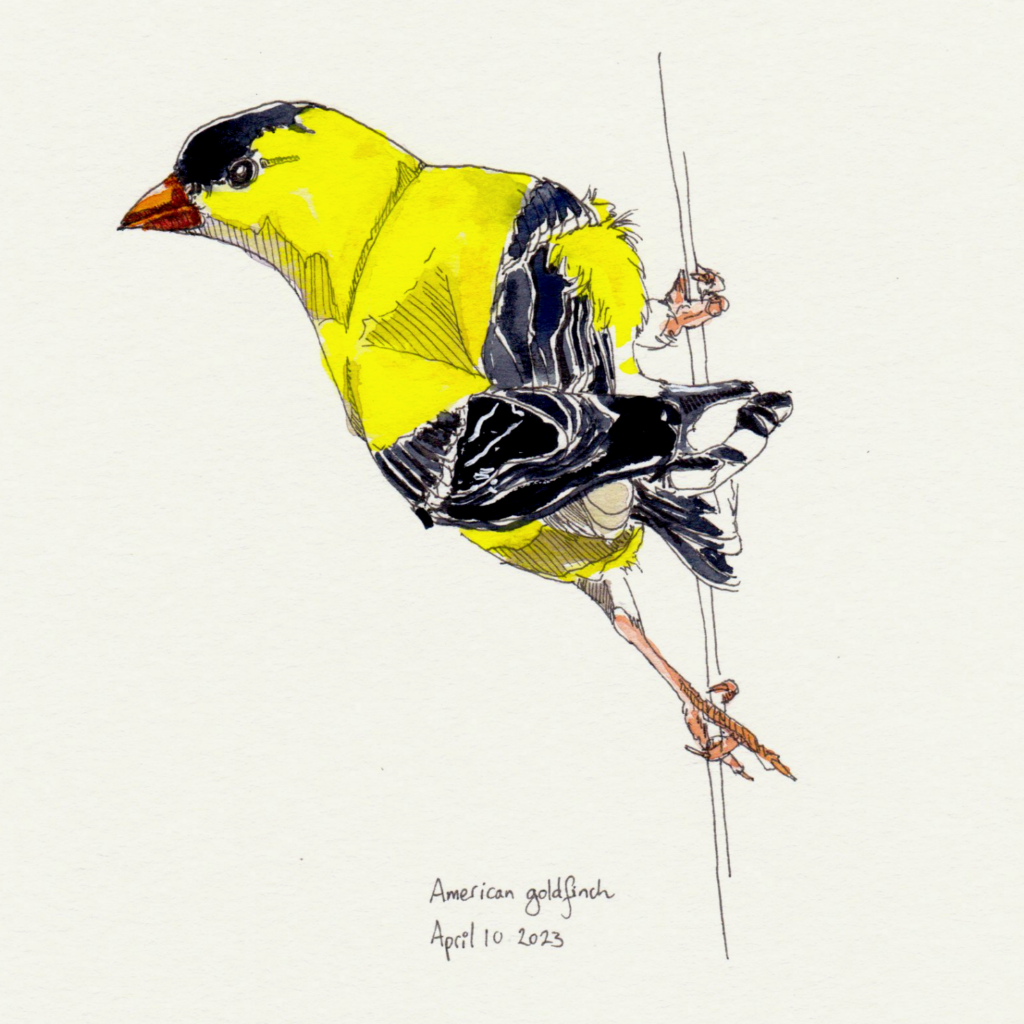
Goldfinches are wonders of transformation. My local birds stay year‑round, but their northern cousins migrate south, and all of them undergo two complete moults each year. In winter, they’re subtle: olives, browns, and soft yellows that blend into the muted palette of the season. But come summer, the males ignite into lemon yellow with crisp black caps and bright white rumps, while females shift into leafy greens and warm, earthy tones. Even their bills change – from ashy pink to cheerful orange and back again.
This is a bird that refuses to stay the same. A bird that reminds us that change can be cyclical, natural, and necessary.
American Goldfinches are among our most strictly vegetarian birds, feeding almost exclusively on seeds. They only ever accidentally consume a bug because of its proximity to seed. This diet has an interesting ecological consequence: their nests are a poor choice for the maligned brood parasite, the Brown‑headed cowbird. Cowbird chicks cannot survive on a granivore diet. The goldfinch nestlings thrive; the cowbird chick does not.
In a world quick to label species as “good” or “bad”, I often point to this example. Neither bird is behaving maliciously. They are simply being the birds they are and in doing so, they maintain a balance older than any of our opinions.
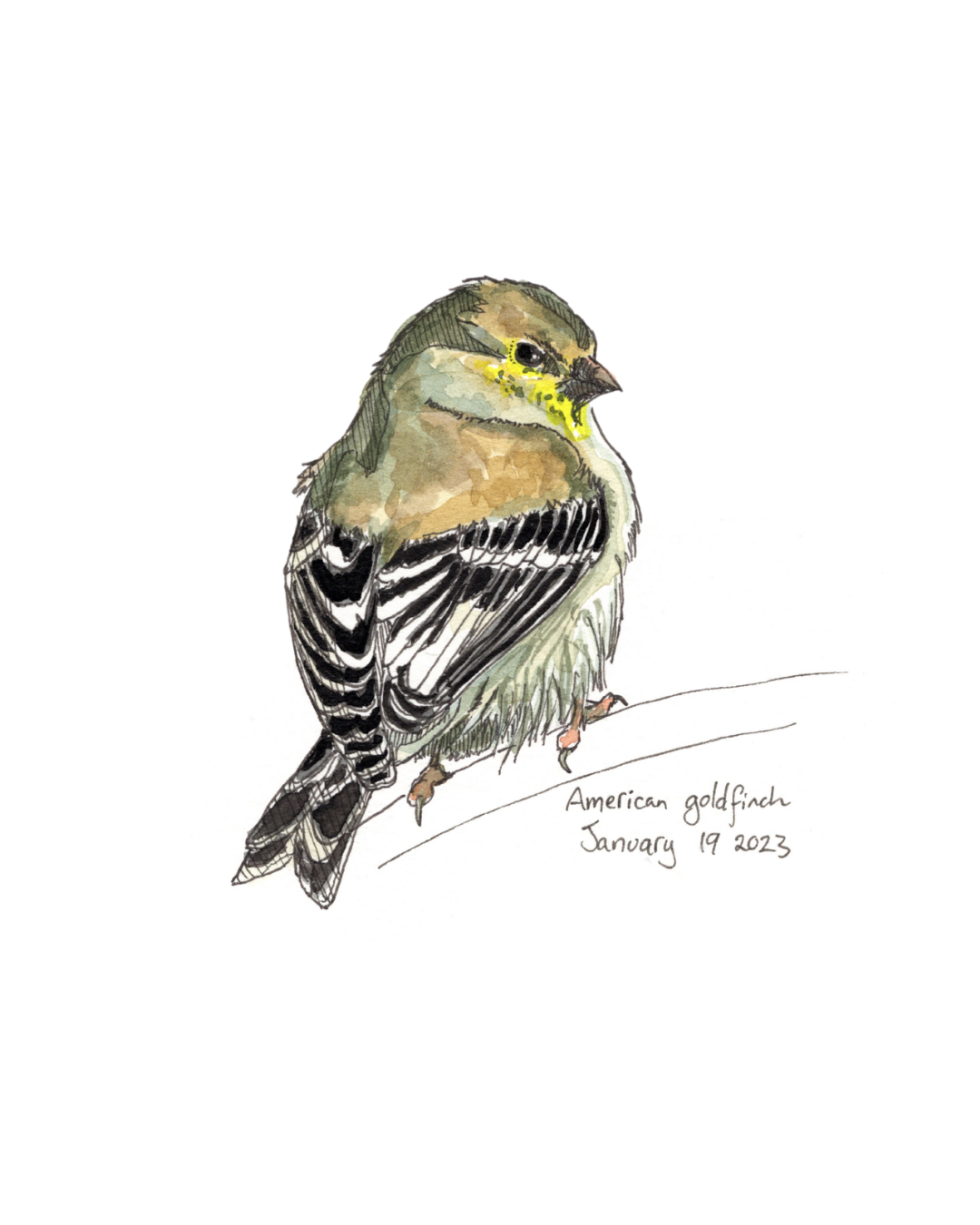
Goldfinches are not just pretty; they are opinionated. They establish hierarchies within their flocks, with high ranking respected females often having the brightest of orange bills during breeding season. Their squabbles are theatrical, full of aggressive flight maneuvers, indignant calls, and the kind of posturing that would make a reality‑TV producer proud.
And then there’s their iconic flight call: the lilting po-ta-to-chip! that rises on the final note, perfectly timed with the upward bounce of their undulating flight. Each mated pair has its own variation, as if every couple has strong opinions about the best potato chip flavour. No wonder they’re squabbly.
Spending so much time with them on the page changed how I saw them in the world. As I kept drawing goldfinches through the year, something shifted in me as much as in the birds. Each sketch taught me a little more about their posture, their spark, their gregarious presence – and with every attempt, my own confidence grew. What began as a stiff, uncertain January 1st bird slowly became bolder, looser, more alive on the page. The goldfinches weren’t just subjects anymore; they were teachers. They reminded me that attention is a practiced skill, that improvement is iterative, and that repetition isn’t redundancy; it’s how attention deepens and confidence takes root.
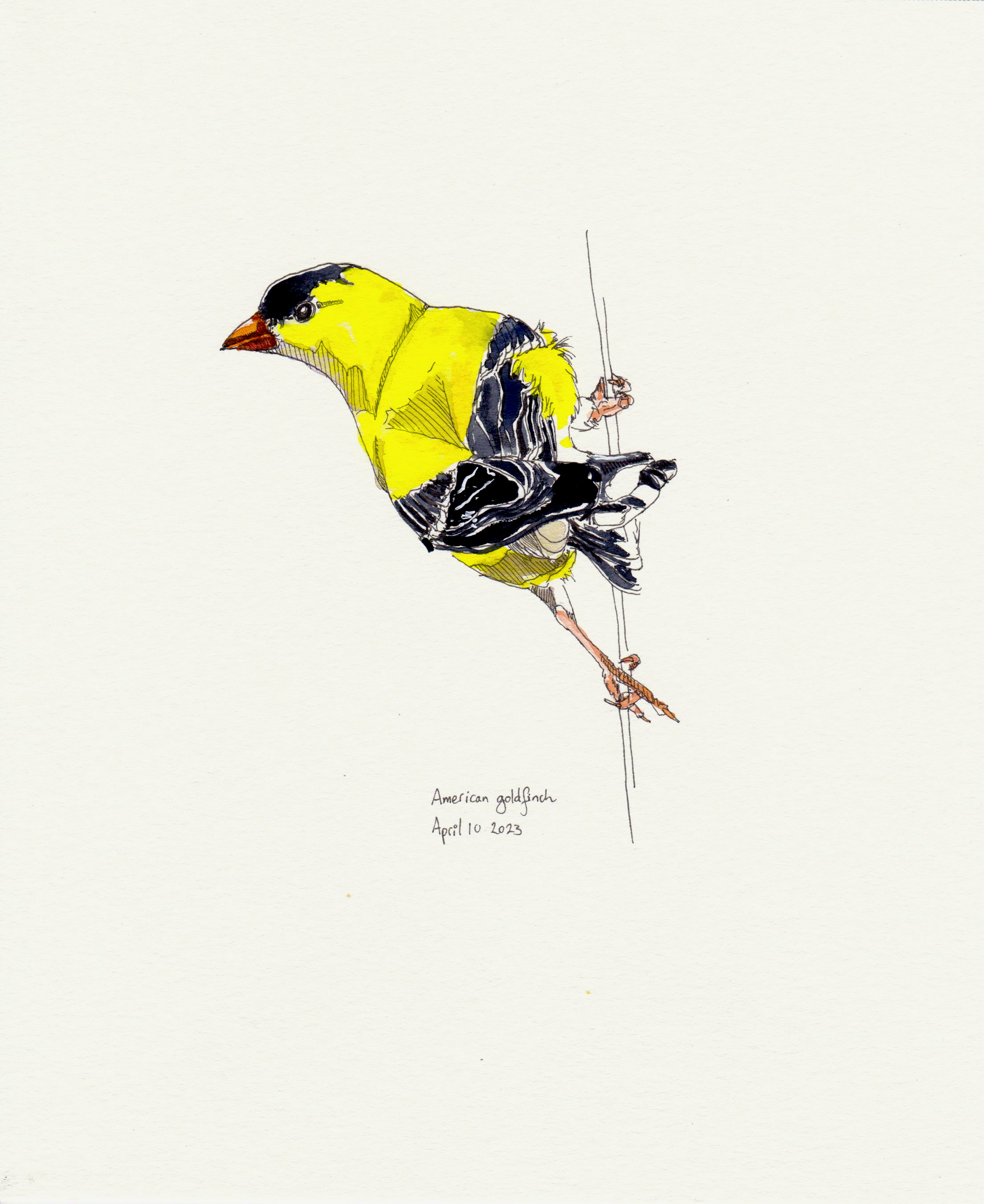 By the time the seasons turned, I wasn’t just observing goldfinches I was in conversation with them. So when the largest flock I hosted during my year of birds arrived, twenty‑seven strong, it felt like I was among familiar characters. My backyard is typical of a 1960s suburban neighbourhood, yet these birds have adapted beautifully to living alongside us. Nyjer feeders guarantee visits, but gardens planted with echinacea, bee balm, and sunflowers offer a more natural invitation.
Goldfinches thrive in the weedy, meadow‑like edges created by our clearing, mowing, and reshaping of the land. Their success doesn’t mean the landscape is healthy; it simply shows how some species adapt to human activity while others disappear. Goldfinches may flourish in the habitats we create, but their adaptability shouldn’t distract us from the larger truth: the land is always responding to us, whether we notice or not. Their presence is a reminder that nature is not “out there.” It is here, woven into our daily lives, responding to our choices.
My thirteenth goldfinch was also my last bird of 2023. Ending the project with the species I began with felt right – a closing of the loop. Over the year, through repetition and attention, I found a way to bring their lightness and big personalities into my watercolours. I felt, finally, that I had communicated something true about their tenacity and their cycle.
Goldfinches are sometimes called “wild canaries,” a name tied to warnings and peril for humans. But I think their companionship offers a different kind of message. If we pay attention to the humble birds at our feeders, the ones we think we already know, we might rediscover our place in the balance we’ve disrupted. We might remember that stewardship begins not with rarity, but with relationship.
The American Goldfinch is common, yes. But it is also extraordinary. And if we let it, this small, bright bird can teach us how to live in the world we share.
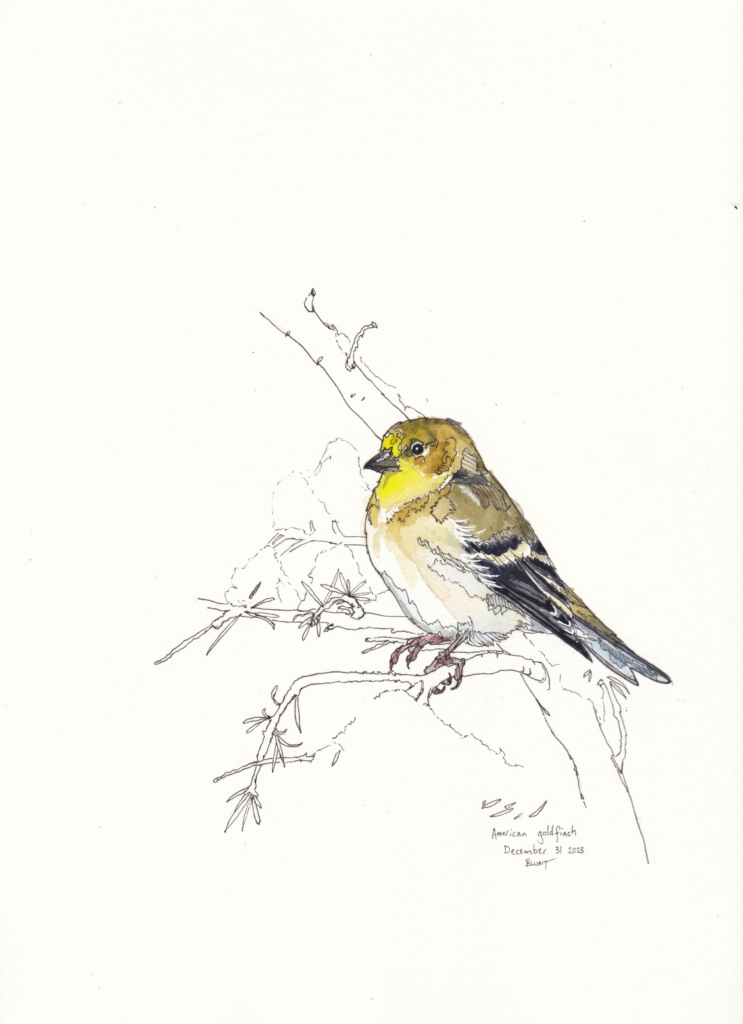
Before you go, here are a few of my favourite goldfinch facts, the little details that delighted me while I drew them all year.
- They are obsessed with thistles, and nest late in June so they can add the thistledown to their nests and have copious food supply for their chicks.
- Bird name etymology: Carl Linneaus gave the American goldfinch the Latin handle of Spinus tristis or “sad finch”, in Anishinaabemowin the little bird is Aginjibagwesi “the one who counts leaves” and in French they are Chardonneret jaune, literally yellow thistle finch.
- They sing Po-ta-to-chip!
- The female goldfinch weaves her nest so tightly with spider webs, thistledown, and plant matter it can hold water.
- The collective noun for goldfinches is a charm.
Want to help Canadian species like finches and more? Stay tuned with the latest in Canadian nature by subscribing for email updates. You’ll receive regular updates about what we’re doing to protect Canadian nature and how you can help.