Where We Stand: At the Intersection of Race and Nature
“Diversity, equity, and inclusion are naturally woven into the environment itself, they’re not external, because humanity is fundamentally part of nature.”
— Dr. Shashi Kant
The inaugural Race and Nature Symposium was nothing short of a landmark success. Bringing together over 200 passionate attendees and hosting over 15 panels, the event provided a space for sharing transformative ideas around environmental justice, engagement of under-represented and racialized communities in programming, and creating a more inclusive nature connection.
The Race & Nature Collective was founded by three amazing people: Dr. Sadia Butt, Dr. Ambika Tenneti, and Dr. Jacqueline L. Scott. Their work focuses on community-based education and engagement, race, migration, and environmental governance and justice.
For years, Nature Canada has proudly supported the work of Dr. Scott and Dr. Tenneti, whose groundbreaking report, Race and Nature in the City, serves as the foundation for our Work to Grow program and helped define our organizational commitments to equity, antiracism and inclusion. This first iteration of the symposium created an empowering haven for knowledge sharing, as well as a safe space for individuals to connect on similar lived experiences.
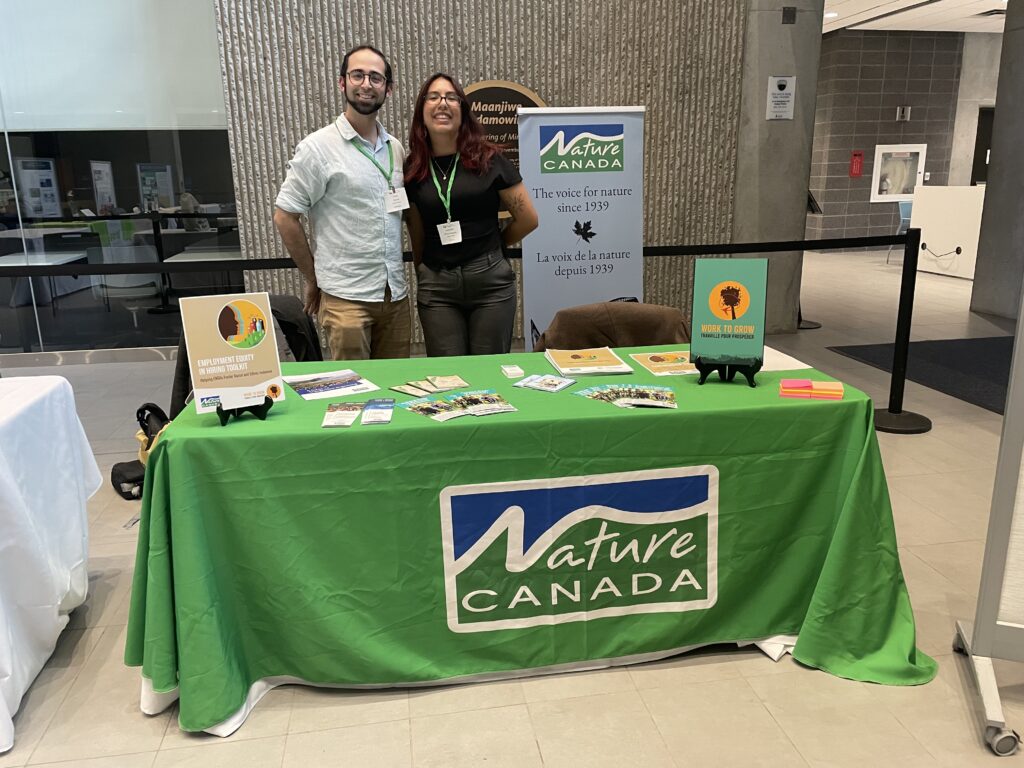
Attending alongside Nature Canada’s NatureHood organizer Jason Barron, I had the privilege of speaking on the panel titled Green Jobs at the Intersection of Race and Nature. There, I shared the inspiring journey of Work to Grow—our triumphs, our lessons learned, and my personal story as a young person of color navigating and stepping into this field.
The morning kicked off with a breakfast held in a grand hall at the University of Toronto Mississauga campus. In his welcoming remarks, Dr. Shashi Kant highlighted that diversity, equity, and inclusion are naturally woven into the environment itself, reminding us that diversity isn’t external, because humanity is fundamentally part of nature. His message resonated deeply with me, emphasizing why embedding DEI into the conservation field is so vital, as creating an environment where everyone can thrive is inherent to the cause. Following the opening speech, attendees split into breakout groups to participate in various panel discussions. We attended Race, Nature and Knowledge Frameworks, where scholars discussed their research, personal journeys as racialized individuals in the field, and the conceptual lenses guiding their work. A standout insight came from York University professor Justin Podur’s presentation, where he noted:
“It’s not enough to be in favour of good, we also have to talk about evil”.
This line was very impactful, encapsulating the persistent dilemma advocates face between championing what we aim to preserve and exposing the forces causing harm.
From health and well-being, to art and creativity, each speaker touched on how their career, research and experiences exist at the intersection of race and nature. Together, we leaned into complex, challenging discussions. While difficult, these conversations are essential for driving real progress and moving meaningfully toward reconciliation. As the environmental landscape turns tumultuous, we mustn’t stop our work to create not just a healthy environment, but a more equitable one.
If you’d like to learn more about these topics, below is a list compiled from our own recommendations along with those from the symposium.
- Race and Nature in the City By Jacqueline L. Scott and Ambika Tenneti
- Alone in Canada: 21 ways to make it better By Jacqueline L. Scott
- There’s something in the water: Environmental racism in Indigenous and Black communities By Ingrid Waldron
- What is a guest? What is a settler? By Ruth Koleszar-Green
- Unsettling Canada: A National Wake-Up Call by Baomi Klein, Ronald M. Derrickson and Arthur Manuel
- Equity pause: a critical tool for advancing equity – SRHR
- Decolonizing and Transforming the Engagement of Indigenous and Black People Within Municipal Planning – Lessons Learned by Cheryl Teelucksingh et. al.
- A Season in Chezgh’un by Darrel J. McLeod
- From the Ground Up: Environmental Racism and the Rise of the Environmental Justice Movement by Luke W. Cole and Sheila R. Foster
- Aqueduct: Colonialism, Resources, and the Histories We Remember by Adele Perry