Iconically Canadian
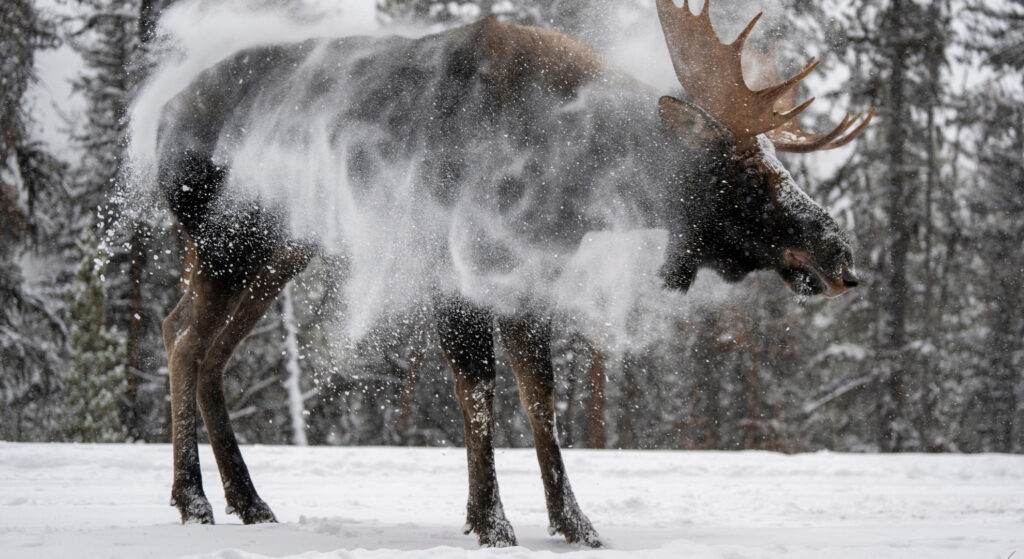
2025 Nature Photo Contest Winner – Simone Heinrich
But how did these creatures become one of Canada’s national symbols?
Being featured on the coat of arms for both Ontario and Newfoundland, it is obvious that the moose is a recognizable Canadian symbol. Perhaps this stems from the fact that Canada has so many of them! The Canadian moose population ranges between 500,000 to over 1,000,000 and they can be found in every single Canadian province and territory except PEI. Moose, therefore, are a unifying and familiar sight for every Canadian and so it is no wonder when one considers Canadian wildlife the mind often wanders to the largest of the deer family!
Moose are highly adaptable and versatile creatures. Masters of water and land, they are capable of diving up to five meters under the water and are able to run over fifty kilometers per hour. Their fur acts as an insulating mechanism that allows them to survive incredibly cold temperatures, their nose even functions in such a way that the cold air they inhale is warm by the time it reaches their lungs! With their long legs, they can also trek through snow more than three feet deep. The endurance of this magnificent animal is a testament to any being living in the true north, including Canadians!
The moose is a majestic and beautiful creature whose strength, adaptability and resilience are a testament to life in Canada, both wildlife and human life. They are a sight that can be recognized quickly by any Canadian from any province! They are a noble animal who, above all, demonstrates the Canadian spirit and the majesty of the Canadian wild.
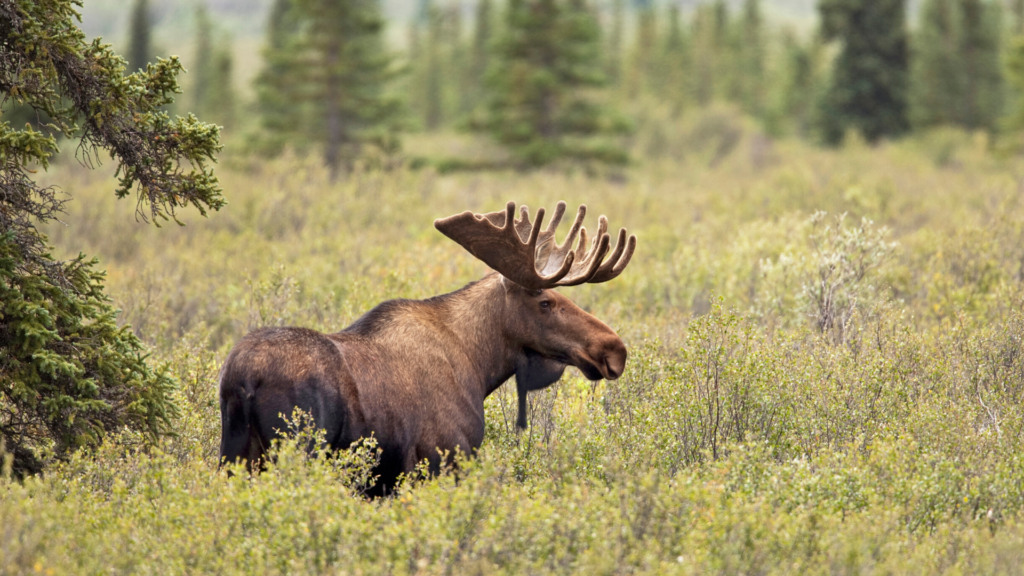
Moose Conservation
Moose face a variety of threats in the wild, such as climate change, hunting, habitat destruction, parasites, and disease. In Canada, populations are endangered in mainland Nova Scotia and are declining steeply in parts of the Yukon and northern British Columbia. It’s important to protect them as they play a key role in ecosystems. Simply by grazing, they are able to change the composition of vegetation in an area. They are also significant to Indigenous Peoples, serving as a traditional source of food and clothing. The loss of moose limits access to vital winter protein sources and affects family harvesting traditions, teaching systems, and food sharing networks.
Help protect the moose and other Canadian animals. →