

Honouring Mi’kmaw Elders Dr. Albert Marshall and the Late Dr. Murdena Marshall
Recipient of Nature Canada’s inaugural Albert & Murdena Marshall Award for Reconciliation
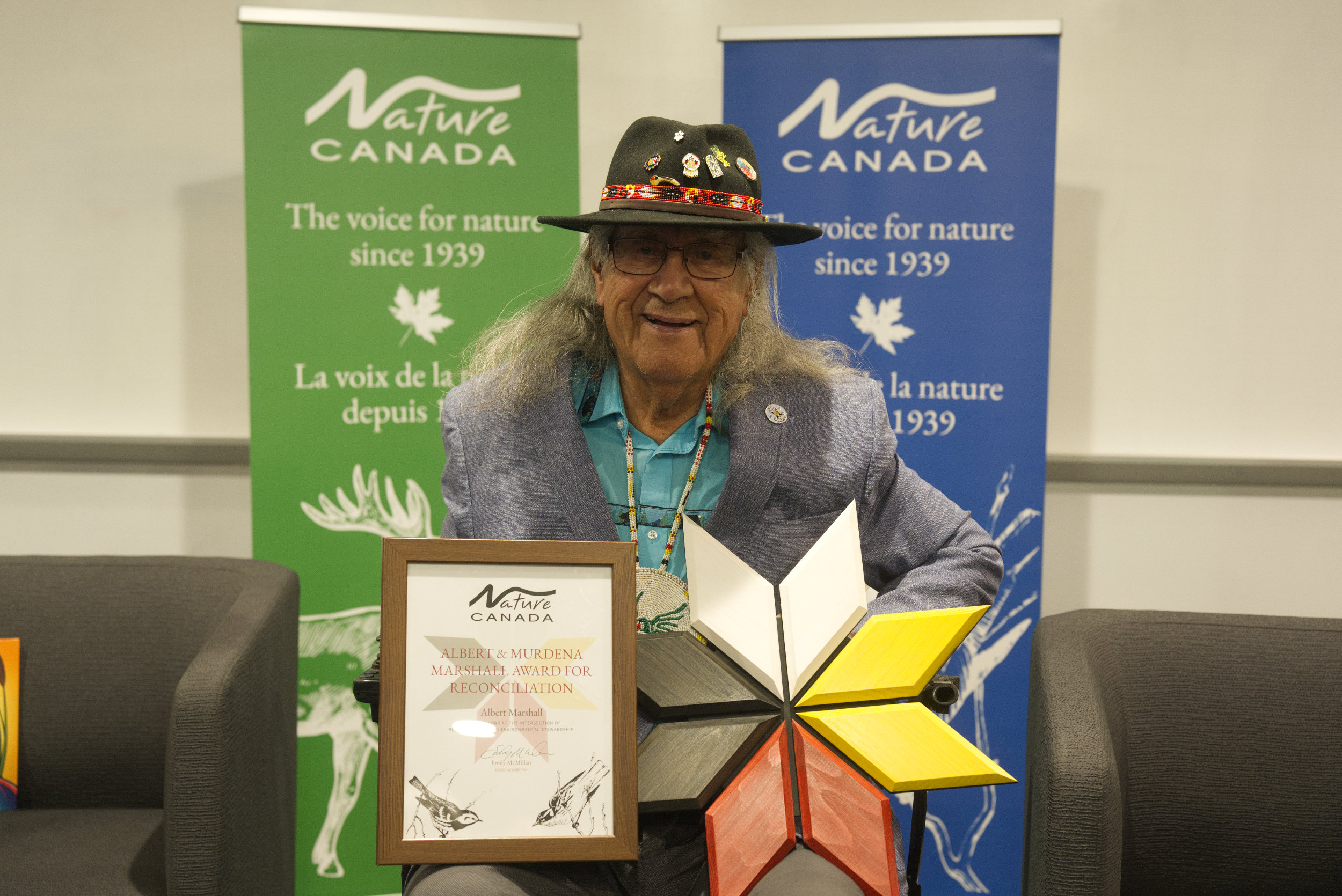
“Remember to walk with care, remember to walk with forgiveness and compassion, and to be able to hold space for anger… to be able to hold space for love, because anger is a secondary emotion to sadness, which is connected to grief, which is connected to the loss of the things that we love.”
— Elder Albert Marshall
Visionaries on the Path Towards Reconciliation
Elders Albert and Murdena Marshall are renowned internationally as the co-creators of Etuaptmumk (Two-Eyed Seeing), a foundational guiding principle that integrates Indigenous ways of knowing with Western scientific approaches. Two-Eyed Seeing encourages learning to see from one eye with the strengths of Indigenous knowledges, and from the other eye with the strengths of Western knowledges, using both together for the benefit of all.
A revered Mi’kmaw Elder from Eskasoni, Unama’ki (Cape Breton), Albert Marshall has devoted his life to preserving and sharing Mi’kmaw culture, language, and governance values rooted in the Mi’kmaq Seven Guiding Principles. His late wife, Elder Murdena Marshall, was a fluent Mi’kmaw speaker, knowledge keeper, spiritual leader, author, and Associate Professor of Mi’kmaw Studies at Cape Breton University (CBU).
Place and Purpose
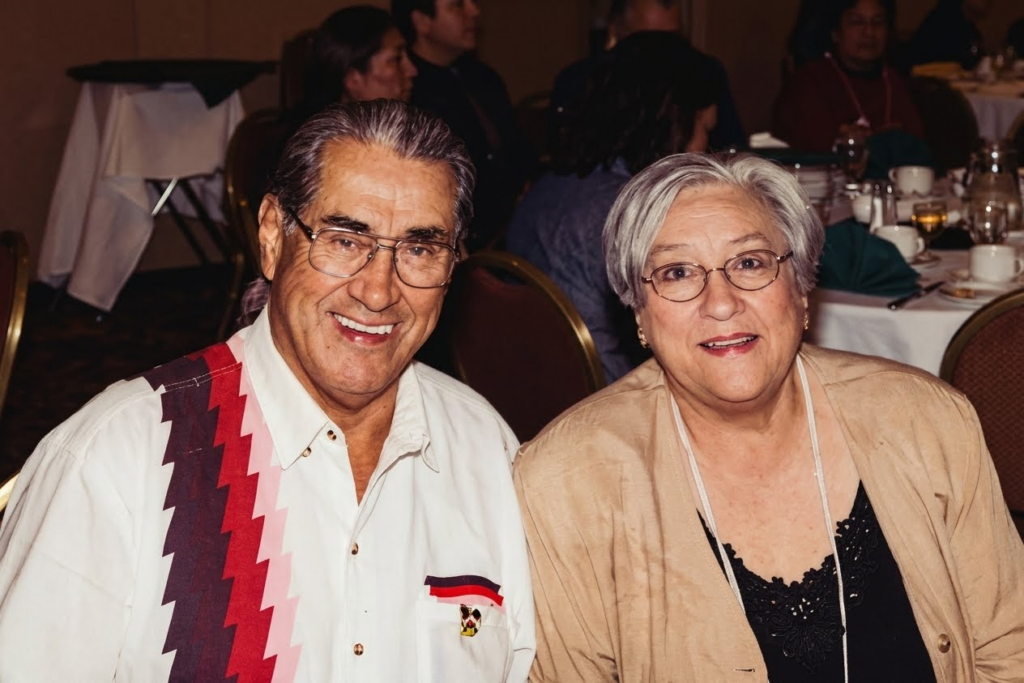
Elder Albert Marshall of Unama’ki (“the Land of Fog,” i.e. Cape Breton) lives in the community of Eskasoni, which takes its name from the Mi’kmaq word, we’kwistoqnik – “where the fir trees are plentiful.” As a boy, Albert was taken to Shubenacadie Indian Residential School on the mainland of Nova Scotia. He attributes much of his recovery from the residential school experience to the woman who later became his wife, Murdena. “Her language, her ceremonies, and her spiritual connection reconnected me to who I am as a Mi’kmaw person,” he says.
The trauma of residential school shaped Albert’s lifelong quest to understand the two cultures – the one taken from him, and the one that tried to assimilate him – and seek ways for them to work together.
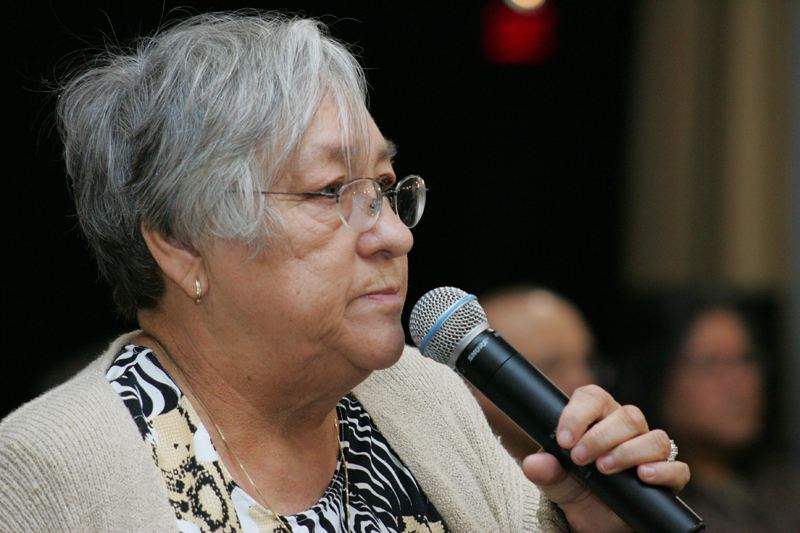
“Etuaptmumk is meant to open the doors of understanding, to try to figure out: Where do I come from? Where am I going? Why are we here? What is our purpose while we are here? To constantly seek other perspectives.”
— Albert Marshall
Recognition and Impact
Dr. Murdena Marshall, an Elder of the Bear Clan from Eskasoni First Nation, was a fluent Mi’kmaw speaker, knowledge keeper, spiritual leader, author, and Associate Professor of Mi’kmaw Studies at Cape Breton University (CBU). The granddaughter of Chief Gabriel Sylliboy, who was the first elected chief of the Mi’kmaw Grand Council, she dedicated her life to community service, education, and language revitalization. She earned a Bachelor of Education from the University of New Brunswick and a Master of Education from Harvard University. She played a key role in developing CBU’s Mi’kmaw Studies program, helped establish Unama’ki College, and co-created CBU’s globally unique Integrative Science degree program alongside Albert Marshall and Dr. Cheryl Bartlett. Among her many honours, she received the Grand Chief Donald Marshall Senior Memorial Elder Award (2006), an honorary Doctor of Letters from CBU (2009), and official recognition in the Senate of Canada.
A respected Mi’kmaw Elder of the Moose Clan, Dr. Albert Marshall has devoted his life to preserving and sharing Mi’kmaw culture, language, and governance values rooted in the Mi’kmaq Seven Guiding Principles. Albert’s leadership with the Unama’ki Institute of Natural Resources and advocacy work has profoundly shaped environmental decision-making, health research, and cross-cultural policy. In 2009, he was conferred an honorary Doctor of Letters by CBU alongside Murdena for their tireless work promoting cross-cultural understanding and healing. Together, they established KECCA (Knowledge Education & Culture Consultant Associates) to support future generations of the Mi’kmaw Nation.
Advancing Reconciliation in Conservation
As one of Canada’s oldest national nature organizations with over 85 years of history, Nature Canada presents the Albert & Murdena Marshall Award for Reconciliation as part of its commitment to shift away from colonial conservation models toward approaches rooted in relationship, reciprocity, Indigenous rights, and justice, in alignment with the United Nations Declaration on the Rights of Indigenous Peoples and the Truth and Reconciliation Commission’s Calls to Action.
Future nominations for the Albert & Murdena Marshall Award for Reconciliation will be open to individuals and groups whose work actively advances reconciliation through nature-based initiatives. Preference will be given to Indigenous-led efforts or projects developed in true partnership with Indigenous communities. Grounded in respect, justice, and ecological integrity, the award honours initiatives that elevate Indigenous leadership and support collaborative, land-based healing.

About Nature Canada
A charity since 1939, Nature Canada has been the voice for nature. Our vision is a Canada where nature is restored, thriving and an integral part of everyday life, rooted in all the decisions that shape our shared future. We recognize Indigenous Peoples as the stewards of these lands and waters, honouring their knowledges and wisdom, and supporting their leadership in conservation and governance.
Today, we represent a network of more than 250,000 members and supporters, united by a shared vision of a thriving planet where nature and people flourish together.