Where does nature fit into the circular economy?
Wheels within wheels, cycles within cycles — that’s nature at its heart. Things keep moving and changing and being reused. Heaven and earth flow into one another. There is no end point where waste is just dumped, to become a mildewed and dangerous eyesore.
That’s the kind of economy we need, too. It’s called the circular economy.
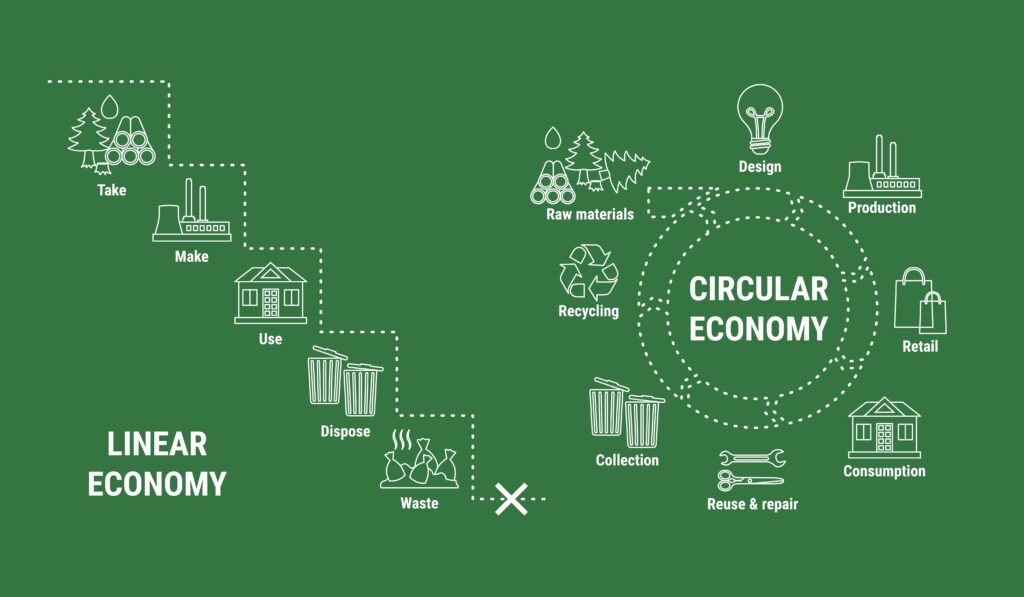
The circular economy involves three principles:
- Eliminate waste and pollution
- Keep products and materials in use
- Restore natural systems
Restoring landscapes — particularly the tracts of land and water where we once dumped garbage — is a big part of this vision. Nature is the great juggler, keeping entire ecosystems in the air and powering countless cycles, from water to carbon to nitrogen. But it can’t do its magic when it also has to juggle plastic, discarded electronics, scrap wood, old paint cans, worn-out furniture, pictures without frames, frames without pictures, ancient mattresses, chipped crockery and all the rest of the stuff we throw away.
The good news is that we can help nature recover from the old linear economy. By doing so, we restore its ecosystem services (absorbing carbon, for example, and providing clean air and water). We also strengthen the cycles that keep the planet healthy.
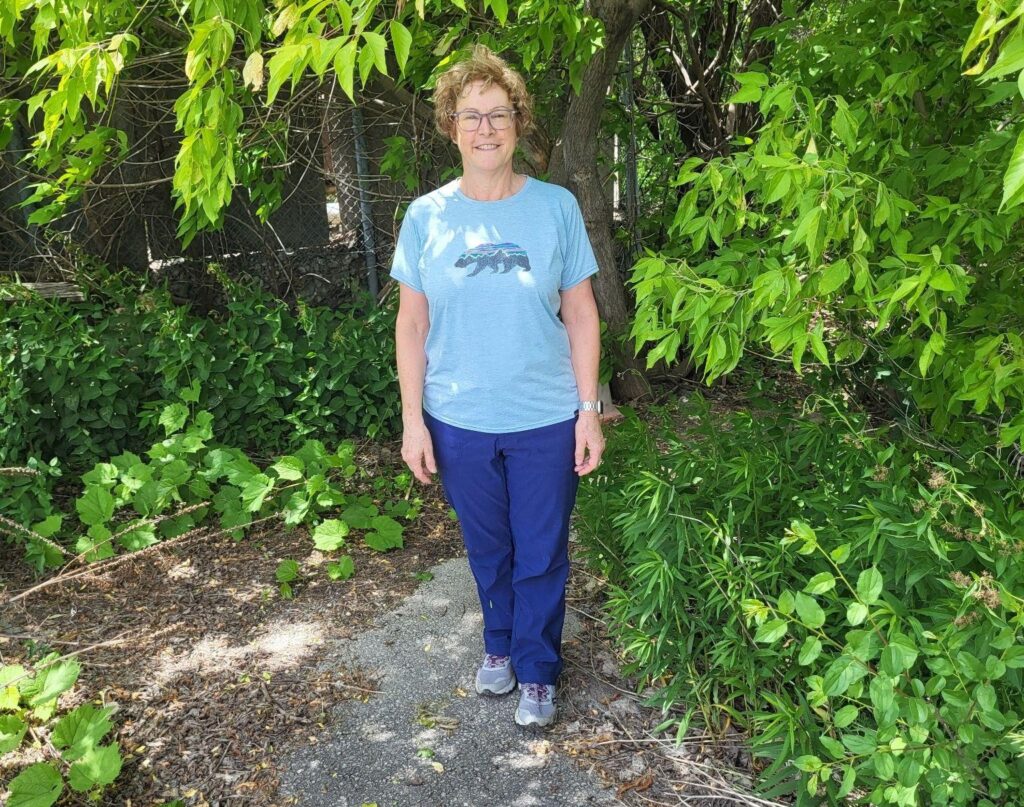
Lynn Miller of Toronto Nature Stewards at the former Sunrise Landfill site. Photo: Jamieson Findlay
From blot on the landscape to living landscape
To see this recovery work in action, I visited the former Sunrise Landfill in Toronto, now part of the Charles Sauriol Conservation Area. I was shown around by a cheerful sandy-haired woman named Lynn Miller, a Lead Steward for the Toronto Nature Stewards, a volunteer-based conservation group that looks after and stewards public land in the natural areas of Toronto. The group is part of Nature Canada’s Nature Network, a community of nature organizations across Canada that form a living system of shared learning, solidarity, and impact.
It’s a small site — about 200 metres long and 50-100 metres wide — but nicely isolated, thanks to the barrier provided by the Don River and the train tracks. “Nobody really knows this place exists,” said Lynn, guiding me from a hot parking lot into cool greenery.
The site was a landfill until the late 1960s when it was “capped” (covered with a layer of clay). Then, starting in 1993, various partners — including North York Hydro Tree Power, the Rotary Ecosystem Education Program, TD Friends of the Environment Foundation and local schools—planted thousands of native trees on the site.
Part of the site was planted in 2025 by Metrolinx, a Government of Ontario agency that works on coordinating and integrating modes of transportation in Toronto and Hamilton. The planting was done to offset the removal of mature trees cut down to make way for the Ontario Line subway.
Lynn and her team of volunteers have looked after the site since 2023 by removing litter and invasive species, planting native species, protecting tree and plant seedlings, and monitoring (through trail cams and plant species inventories) the vibrant life of this site.
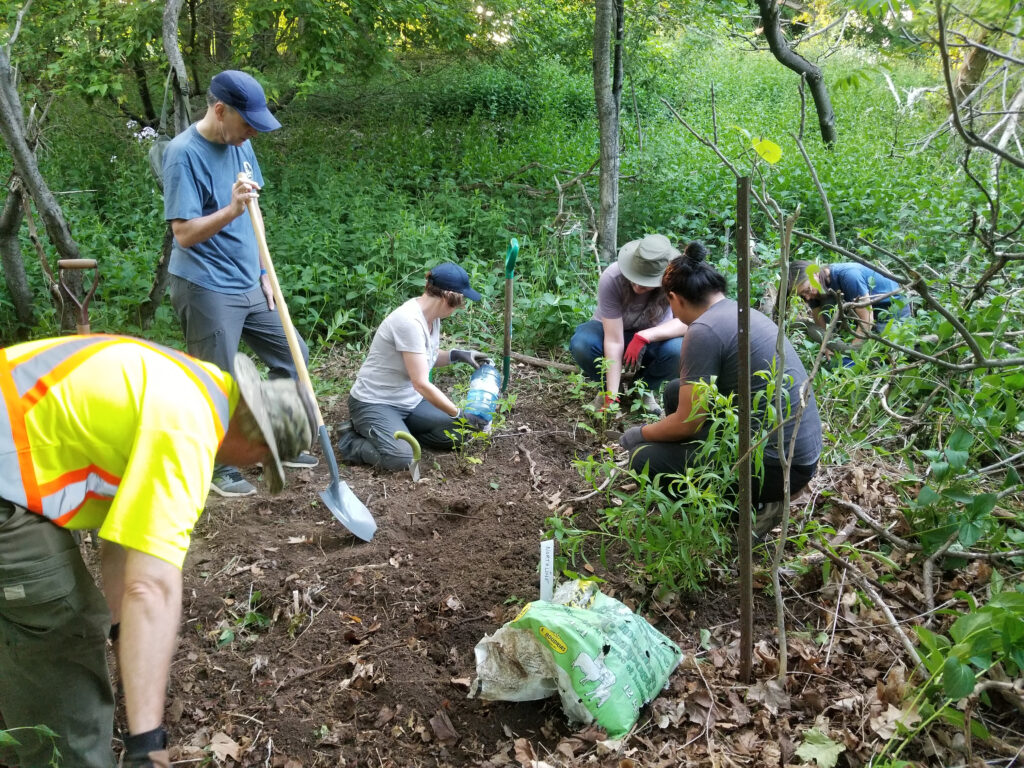
Volunteers with the Toronto Nature Stewards at the Sunrise site (photo Lynn Miller).
The area hasn’t completely shed its landfill past, however. Walking through it, I passed several water-monitoring stations as well as outlet pipes to release methane. (A potent greenhouse gas, methane is created when microorganisms decompose organic material.) At the west end of the remediated area, we came to a leachate containment system, which prevents the seepage of harmful chemicals into the water table. Garbage still lies layered in the earth, hidden but not forgotten. “I’ll be planting something,” says Lynn, “and I’ll look down and say, ‘What is this, a boot?’”
Still, this tract of land has been given back its soul. Lynn and her colleagues are restoring the land’s natural capital – the live-giving array of nature’s “goods and services” that keep the planet running.
Nature Canada is proud to support our Nature Network Partner the Toronto Nature Stewards, most recently through a grant to help restore the city’s Prairie Drive Park. Find out how your organization can get involved — sign up for the Nature Network newsletter!