The Great Egret: A Bird of Grace, a History of Harm and What Its Return Teaches Us
Thanks to Meredith Blunt of Bird Friendly Kitchener for providing this month’s blog.
The Great Egret (Ardea alba) is one of those birds that seems to carry its own light. Watching them is meditative; their energy is not as ferocious as their Great Blue cousins nor as weirdly cute as Green Herons. I watch three egrets move through a local wetland with slow intentionality, each step deliberate, each pause meaningful. When one lifts off from the marsh, it’s hard not to feel something. Awe, maybe. Gratitude. A reminder that the world still contains moments of grace.
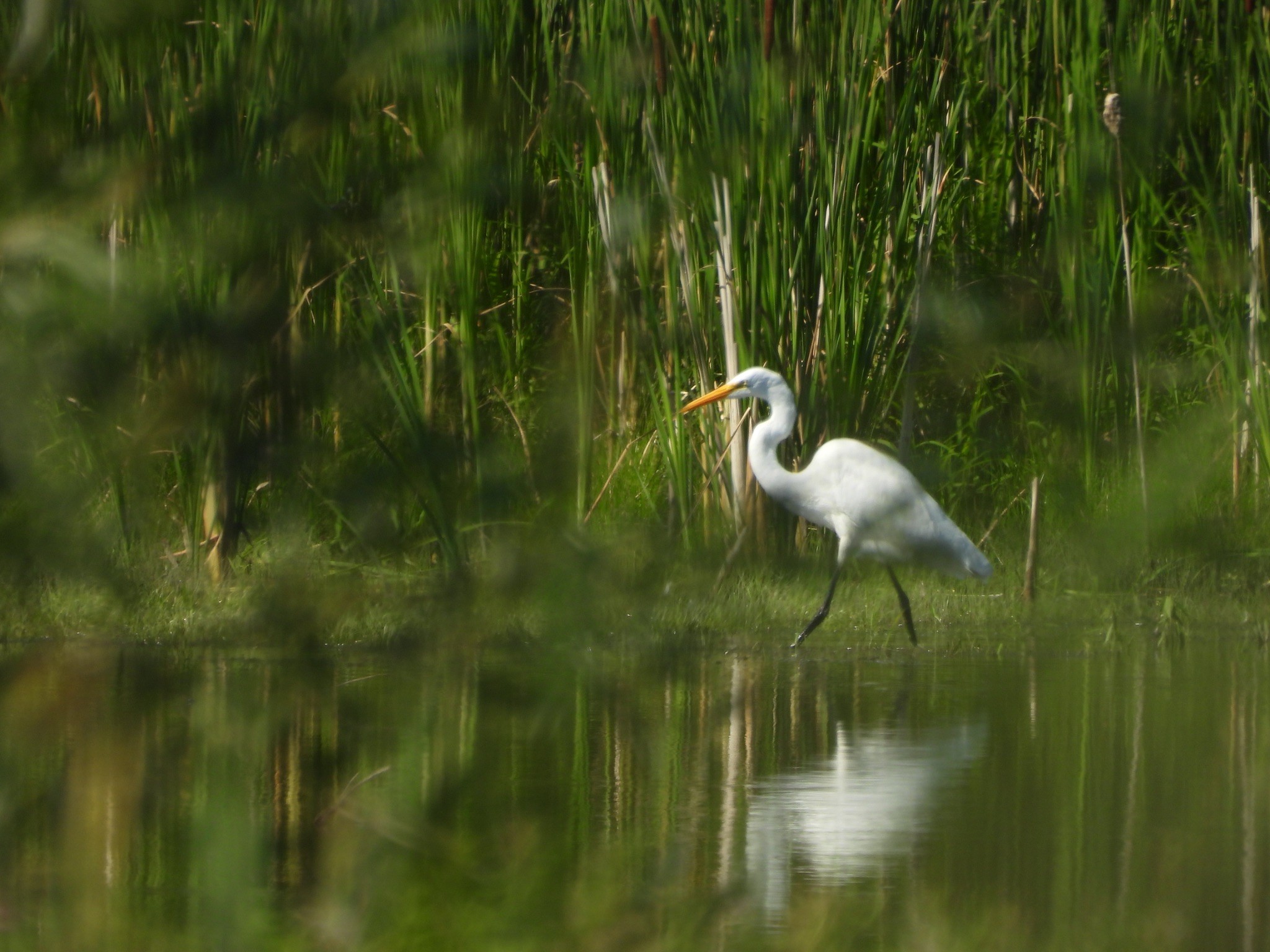
Great Egret (Ardea alba) at Columbia Lake, Waterloo ON. Photo: Meredith Blunt
But their elegance has a history steeped in violence. The same beauty that captivates us today once drove the species to the brink of extinction. In the late 19th and early 20th centuries, the egret’s delicate breeding plumes, aigrettes, became the most coveted ornament in the fashion world. Hats, bridal wear, and high‑society outfits were trimmed with feathers so fine they seemed to float. The demand was enormous. And the cost was devastating.
The Great Egret’s story is not just natural history. It’s a cultural reckoning. A reminder that beauty can be both a gift and a temptation, and that admiration must be paired with responsibility if we want the natural world to endure.
A Bird Built for Wetlands
Great Egrets are members of the heron family, found across much of the globe. In North America, they frequent marshes, estuaries, lakes, and slow‑moving rivers. Places where water and vegetation create a mosaic of life. Their hunting style is patient: they stand still or move with measured steps, waiting for fish or amphibians to come within striking distance. When the moment arrives, their long necks snap forward with astonishing speed.
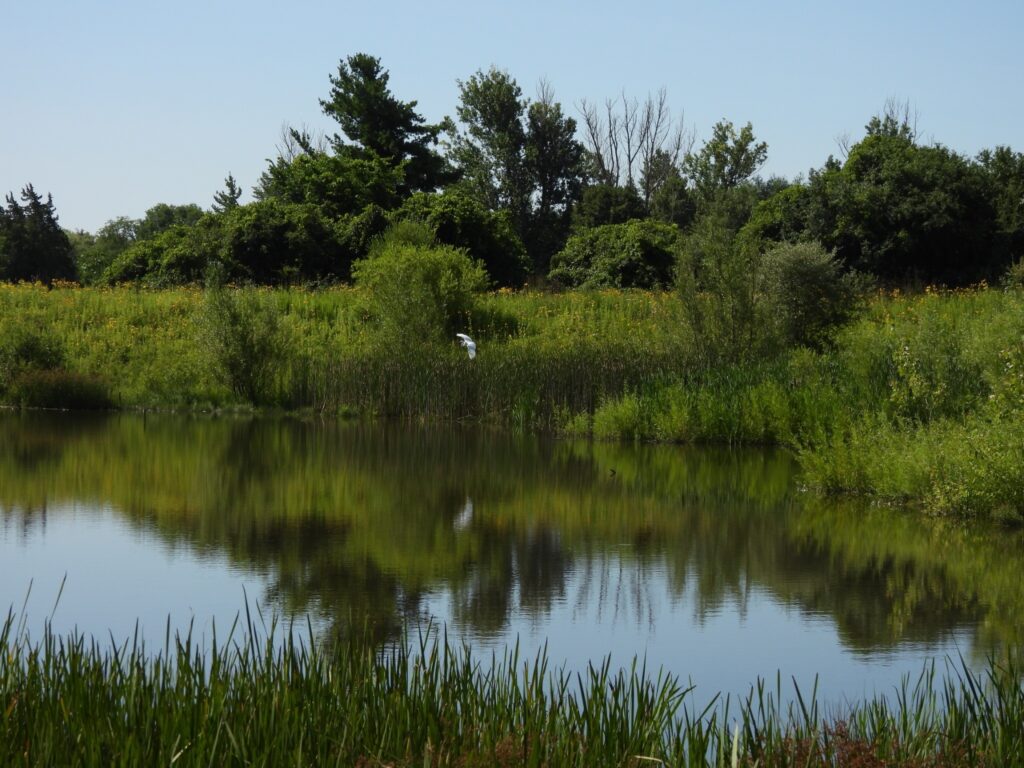
A Great Egret in flight. (Photo: Meredith Blunt)
Their plumage is simple: white feathers, black legs, a yellow bill, though nothing about staying luminous in a marsh feels simple to me. During breeding season, they grow long, lacy plumes along their backs, feathers so delicate they look like wisps of cloud drifting behind them.
These aigrettes evolved for courtship displays, not commerce. Yet in the late 1800s, that’s exactly what they became.
The Plume Trade: to the Brink of Exinction for Hats
By the 1880s, feathered hats were the height of fashion. Ornithologists walking through New York City counted feathers from dozens of species on women’s hats. The aigrettes of Great Egrets were among the most prized — rare, expensive, and associated with high social status.

Fashionably dressed woman circa 1910 wearing an aigrette hat.
These plumes were grown only during nesting season. Hunters targeted egrets on their nests, shooting adults and leaving chicks to starve. Entire colonies, sometimes thousands of birds, could be wiped out in a single day. At its peak, the plume trade killed millions of birds each year. Great Egrets, Snowy Egrets, and other wading birds declined so sharply that extinction became a real possibility.
It’s difficult to imagine now, seeing Great Egrets standing calmly in roadside marshes, that they were once nearly gone. But their beauty was profitable, and profit rarely pauses to consider limits.
The Turning Point: Outrage, Organizing and the Women behind Modern Conservation
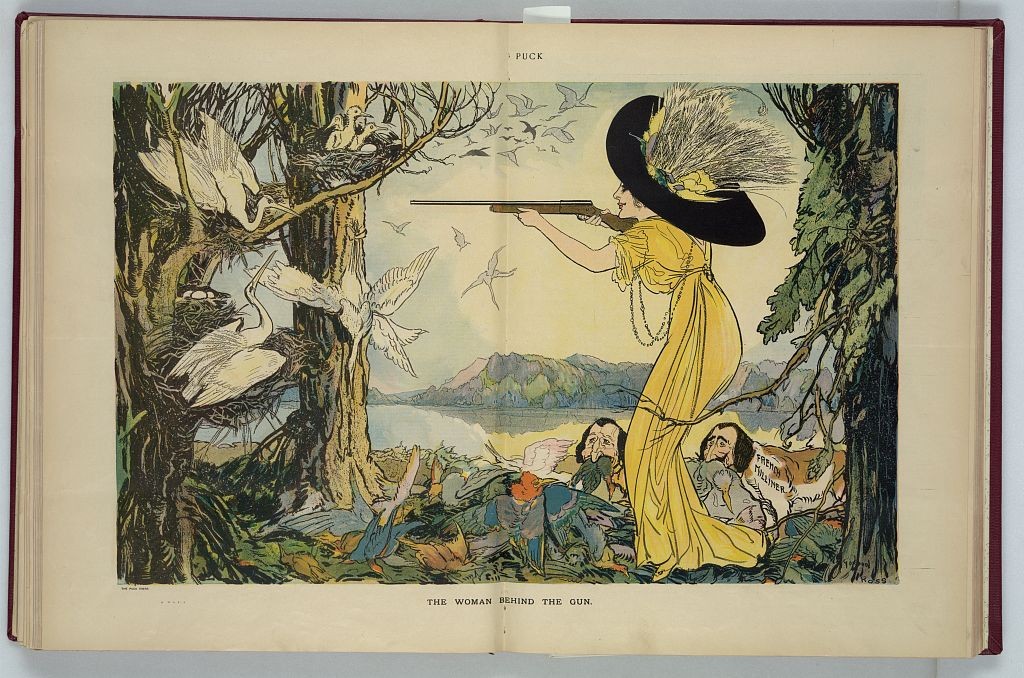
“The woman behind the gun” by Gordon Ross (1911). (Library of Congress)
Eventually the plume trade sparked outrage, especially among women expected to wear the very hats that required such slaughter. Many refused. And two of them, Harriet Lawrence Hemenway and her cousin Minna B. Hall decided refusal wasn’t enough.
In 1896, after reading about the carnage in southern rookeries, Hemenway invited Hall to her Boston home. Together they began a quiet but radical campaign: hosting tea gatherings for society women, urging them to boycott feathered hats and use their influence to make the practice unfashionable. Polite conversation became a lever for cultural change.
They understood the limits of their era. A conservation organization founded solely by women would not be taken seriously by legislators or scientific institutions. They led the work, but the social constraints of the time meant they needed male allies to open doors they weren’t allowed to walk through alone. With their coalition in place, they founded the Massachusetts Audubon Society, one of the earliest bird‑protection organizations in North America.
Their practice of grassroots organizing, education, and moral persuasion spread across the country, inspiring other state Audubon societies. The Great Egret became the emblem of the National Audubon Society precisely because it represented this turning point: a species nearly erased by human vanity, then saved by collective action.
The momentum Hemenway and Hall helped ignite led to real change. States began passing laws banning plume hunting, and public pressure mounted. In 1916, Canada and the United States signed the Migratory Bird Convention, recognizing that protecting birds required cross‑border cooperation. By 1918, the commercial hunting and sale of protected migratory birds and their feathers had been halted across North America. That cross‑border commitment continues today, as both countries work together to protect species whose lives depend on shared flyways rather than political boundaries.
The Great Egret’s recovery is one of the earliest conservation success stories in North America. Today, their populations are stable, their range has expanded, and they nest in colonies again. The same spirit that animated Hemenway and Hall, the belief that everyday choices can protect birds, lives on in modern bird‑friendly city work. Today’s advocates push for window‑collision prevention, dark‑sky policies, pesticide reduction, and habitat restoration. The tools have changed, but the heart of the movement is the same: caring people taking action.
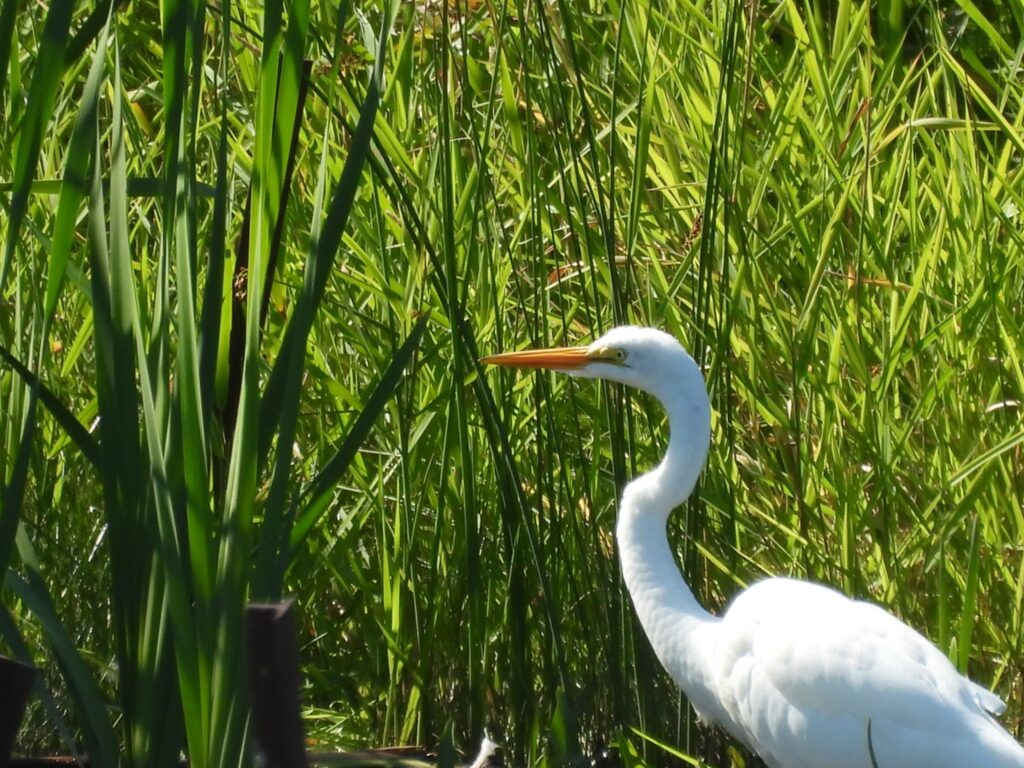
Great Egret (Ardea Alba). Photo: Meredith Blunt
Teachings on Beauty and Responsibility
The Great Egret’s story forces us to confront a paradox: humans are drawn to beauty, yet our desire can destroy the very thing we admire. The plume trade wasn’t driven by malice. It was driven by fashion, social pressure, and the belief that nature was endless.
Ordinary citizens, many of them women excluded from formal political power, refused to accept that beauty required violence. Their activism helped build the foundation of modern conservation.
When we see Great Egrets today, we are witnessing more than a bird. We are seeing a survivor of industrial fashion, a symbol of resilience, a reminder that advocacy works, and a lesson in how quickly harm can escalate when beauty becomes a commodity.
The egret teaches us that attention is a form of stewardship. We nearly lost them because we admired their feathers more than their lives. We saved them when we learned to admire them differently.
A Bird that Returned… And a Responsibility that Remains
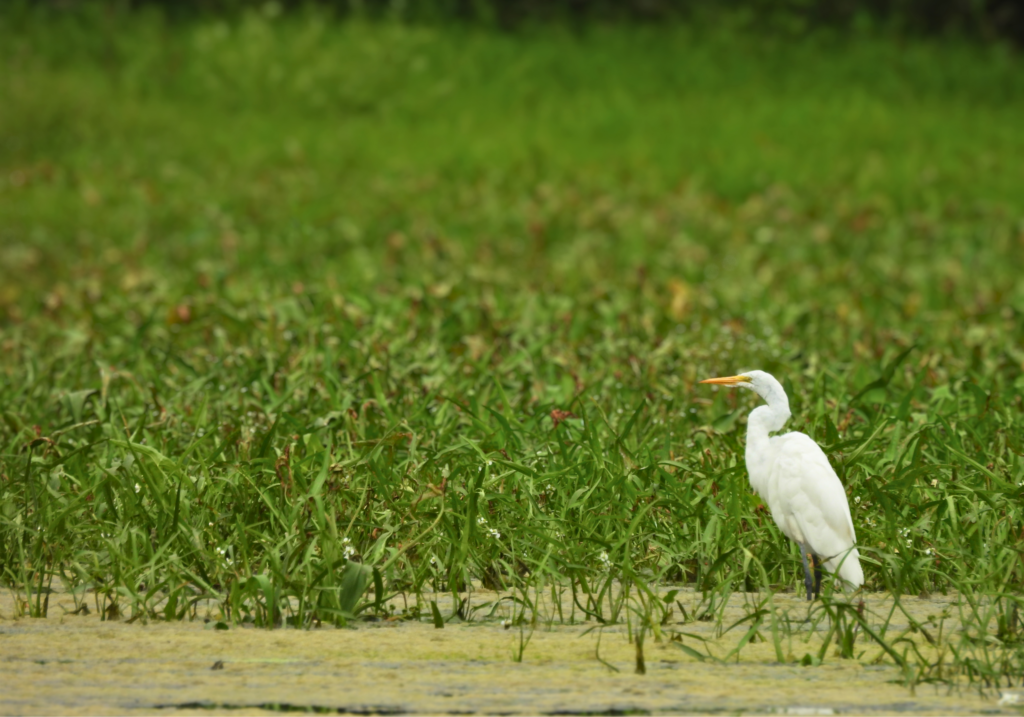
Great Egret (Ardea alba) at Ruggles Road, Floradale ON. Photo: Meredith Blunt
The Great Egret’s comeback is not guaranteed forever. Wetland loss, pollution, and climate change continue to threaten the habitats they rely on. Their survival story is a blueprint, not a conclusion. A reminder that conservation is a choice to be renewed again and again.
The egret’s elegance is no longer a commodity. It’s a reminder that beauty in the natural world is not something to possess, but something to protect. A reminder that species can recover when we give them the chance. And a reminder that human admiration carries weight, because the way we value nature shapes what survives.
The Great Egret returned. And in its return, it leaves us with a responsibility: to ensure that our appreciation for beauty never again becomes a threat to the lives that create it. To me, the Great Egret illustrates that beauty in nature isn’t just something to admire – it’s something to honour with how we live.
Want to help Canadian species and spaces? Stay tuned with the latest in Canadian nature by subscribing for email updates. You’ll receive regular updates about what we’re doing to protect Canadian nature and how you can help.